


Grades 6-12 Alternative Education




77 High Street, North Berwick, ME 03906
Welcome to MHA
Where every student's journey
is met with personalized care and unwavering dedication. At MHA, we're more than just an educational institution; we're a community committed to fostering growth, resilience, and belonging.
Through tailored instruction, therapeutic support, and a nurturing environment, we empower students to embrace challenges. Our mission is not only to educate but to uplift, restore confidence, and cultivate meaningful aspirations for each individual

Life at MHA
Mission Statement
Mary Hurd Academy is dedicated to providing an educational experience that comprehensively addresses the individual needs of learners. Through personalized instruction, therapeutic interventions, and a positive school wide culture, students are able to develop a sense of belonging that will serve them as successful future community members. We promote accountability through challenging experiences and restorative practices that allow students to take ownership of their own educational experiences. We work to restore student self confidence and empower them to develop meaningful goals and future aspirations.
MHA is a therapeutic self contained school that aims to support a students ability to maintain safe and socially appropriate behaviors in the school environment. This is done through multi tiered systems of support designed to meet the needs of all students. We offer a structured school day with consistent expectations designed to promote growth and student well being.
Programming at MHA is developed around two specific areas;
Behavioral/Therapeutic interventions that support behavioral goals
Individualized academic programming that supports functional behaviors and student growth

MHA staff and students are expected to engage in restorative practices as a response to problematic situations. The fundamental hypothesis of a restorative approach is that students are happier, more cooperative and productive, and more likely to make positive changes in their behavior when teachers and other staff do things with them, rather than to them or for them. By using restorative practices, we seek to foster a school culture that focuses on building, maintaining, and, if necessary, repairing healthy relationships
Restorative Practices
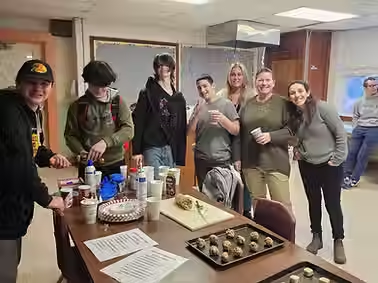
MHA is built around a school wide behavior support plan that utilizes a behavior leveling system, incentives, clear consistent behavior expectations and constant feedback. The following interventions are built into our system:
-
Community building opportunities
-
Frequent motor breaks, preferential seating, frequent prompting
-
Opportunities to access zen den space for sensory needs and to promote de escalation
-
On site clinical social workers
-
Low staff to student ratios
School-Wide Positive Behavioral Supports Plan

Homeroom: Set time at the beginning and end of every day that is utilized to support the functional and behavioral needs of students in a preventative manner.
Core Academics: Students will participate in at least 4 academic cores daily in the areas of math, science, social studies, and English.
Specially designed instruction: Students will receive additional specially designed instruction in their specific skill deficit areas as outlined in individual IEP’s.
Elective classes: These are courses offered three times weekly on an eight week rotation. The focus of these courses is around leisure and recreational skill development.
Academic Programming

Community Circle: Weekly meetings that support the building of community and positive culture.
Co Op experiences: MHA students are able to access the same co op opportunities as students at NHS.
Extended Learning Opportunities/Service: Students will have opportunities to take their learning outside of the classroom and into community. Examples of such experiences are; a local boxing gym, local art studio visits, and backpack program participation.
Transition/future planning experiences
Functional Skills Programming
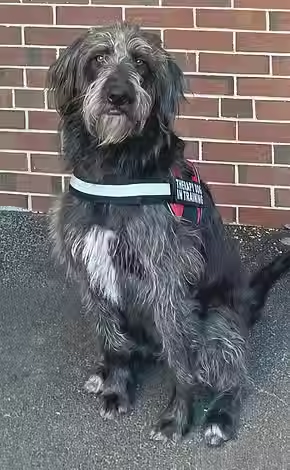
MHA's Therapy Dog


